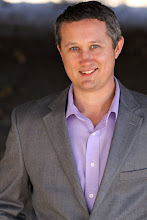
Watch Aaron in the film Holy Wars

Showing posts with label persecution. Show all posts

Saturday, August 18, 2012

In Defense of the Southern Poverty Law Center

When I was in Junior High, I attended a private Christian school where my youth pastor used to show us videos of Christians in public schools being arrested for praying at the flagpole, as well as future Christians being executed because of “liberals who want to take away our right to worship.” So I get it. When a guy walks up to a conservative Christian organization’s headquarters and starts shooting, it confirms what many people already believe: Evangelical Christians in America are a persecuted minority; and the people behind the persecution are groups like the Southern Poverty Law Center, a group that labels anyone who “takes a stand for Biblical righteousness” a hate group. The storyline would sound reasonable if it weren’t for one small problem: It’s completely ridiculous.

To my friends in the evangelical community, what happened at the headquarters of the Family Research Council was a despicable act of violence that deserves to be condemned without reservation, but please don’t use what happened as a pretext to shore up prejudice against those in the LGBT community—who, by the way, have also condemned this act of violence—or as a pretext to exact vengeance against groups like the Southern Poverty Law Center, a group that works to provide a service to society by raising the alarm against hate and extremism.

In a statement to the press, Tony Perkins, the head of the Family Research Council, said,

“Corkins was given a license to shoot an unarmed man by organizations like the Southern Poverty Law Center that have been reckless in labeling organizations as hate groups because they disagree with them on public policy.”

He went on to say,

“They have repeatedly and without cause demonized FRC, and have spent years stirring up anger in the homosexual community and directing that anger toward an organization whose only crime is to promote and defend the classic American values of faith, family and freedom.”

Putting aside the logical fallacy that criticism = giving someone a license to shoot, the fact is the Southern Poverty Law Center didn't label the Family Research Council as a hate group because “they disagree with them on policy” or because they “defend the classic American values of faith, family, and freedom.” If that were the case, they would have put Focus on the Family on the hate group list, or the National Organization for Marriage. Both of these groups teach that homosexuality is a sin and lobby against gay marriage.

The stated reason the Southern Poverty Law Center has put the Family Research Council on the hate group list since 2010 is, according to their website

“because it has knowingly spread false and denigrating propaganda about LGBT people — not, as some claim, because it opposes same-sex marriage……We criticize the FRC for claiming, in Perkins’ words, that pedophilia is ‘a homosexual problem’”

And because

"An FRC official has said he wanted to ‘export homosexuals from the United States.’ The same official advocated the criminalizing of homosexuality.”

It’s one thing to say the Bible says homosexuality is a sin and I oppose gay marriage. It’s another thing to say these people are out to get your children! It’s like when Kirk Cameron pegged homosexuals as “destructive to so many of the foundations of Western Civilization” , and then cried foul when the “liberal” media called him out on it. You can’t single out a group of people as a threat to civilization, and then cast yourself in the role of a victim when people suggest that your words are hate speech.

I believe that we in the American evangelical community are guilty of a persecution complex. Which is sad, because I’ve been to countries where New Testament believers are actually persecuted, like the videos my teachers used to show me in Junior High. The believers I've met in these countries often live quiet and peaceful lives, sharing their faith and loving the people that torture them and rat them out to the police. They’re the ones the Apostle Peter talked about, who “do good and suffer” and “take it patiently.” This, according to Peter “is commendable before God.”

New Testament believers living in places that actually persecute religious minorities often suffer for simply being who they are, and their suffering, when taken patiently for following in the footsteps of Christ, who “when reviled, did not revile in return” is commendable before God.

I’m not sure that “persecuted” Christians in America can say the same thing.

Thursday, February 03, 2011

Violence in Egypt forces Christians to pray in their homes

Pastor George, a church pastor who partners with Open Doors in Egypt, had just returned home from a prayer meeting in the house of a believer shares, “We cannot go to the church. In every street is a mosque, where Muslims can go to, but there are few churches and most people feel unsafe.” As a result of the danger of going to churches, Christians are coming together in houses for praying for their country." We see that the uproar could lead to a better Egypt and that things could turn out for good, but we do not know yet. The people are afraid for the future, since this is an extremely critical time. But we trust in God, and we hope and pray for a new Egypt, with democracy and freedom for Christians.”

Pastor George adds, “The situation on the streets is difficult. We hear gunshots and people are killed on the streets. We also are having problems with the provision of our food. The infrastructure in the country is under pressure.” According to Pastor George the work of his church in Egypt, in partnership with Open Doors, has come to a standstill. “Our co-workers and other volunteers cannot go to their ministries or work anymore,” says George. “Road blocks, lack of public transportation and curfew are all hindering this. Banks have been already closed for a week and the ATMs are empty. Almost everything in Egypt runs by cash money, and that is finished for almost all Egyptians.”

The current crisis in Egypt is challenging for Christians and they are calling on the church in the West to unite in prayer with them for the future of their country. Dr. Carl Moeller, president/CEO of Open Doors USA says, “The events of recent days show that while the majority of Egyptians support the existence of the Coptic church, many more Muslim Egyptians, while not militant, are religiously opposed to those who convert from Islam to Christianity. Muslim Background Believers continue to face widespread hostility simply for wanting to exercise religious freedom and change their religion from Islam to Christianity.

“It is also causing many to consider the consequences of a potentially more radical Muslim government replacing the current regime. While the situation is still very unclear, the potential for any power vacuum to be filled with extremist political groups such as the Muslim Brotherhood is very real and could have grave consequences,” says Moeller. “This is a time for the entire body of Christ to pray for the church in Egypt and the entire region. It is also a time for all peoples of every religion to come together and work for true freedom, democracy and peace.”

Egypt is ranked No. 19 on the Open Doors 2011 World Watch List of the 50 worst persecutors of Christians. On New Year’s Day a suicide bomber killed 21 Christians and injured hundreds of others in front of the Two Saints Church in Alexandria. Last month an Open Doors team visited Egypt where a Coptic Christian brother shared this message.

The devil said to Jesus, “I killed 21 of your people” (Referring to the bombing of the Coptic church in Alexandria). Jesus replied, “You did not kill 21. You sent them to Me and you mobilized the church to pray.”

Father we unite today in prayer asking for a peaceful end to the demonstrations with no more casualties; protect your flock and shield them from injury and further bloodshed. Also we ask that You richly provide them with provisions of food and resources so that Your work can continue in Egypt unhindered. We know that some demonstrators want to cause harm to the country and Christians, and have hidden agendas. We pray that their schemes will be thwarted and that their intentions will be exposed. And, if there is a change of power in the government we ask that it ultimately results in complete freedom of religion for Christians and other minorities. Father You are sovereign and in control of all the details. We give thanks in advance for being “our refuge and strength, an ever-present help in trouble.” (Psalm 46:1) Amen.

If this story has touched you, please share your thoughts with us below:

Source: Open Doors

Wednesday, August 12, 2009

Both sides of the "culture war" need to broaden their human rights agenda

Last week, radical Muslims in Pakistan began terrorizing the Christian minority in the town of Gojra. At least 9 people were killed, over a hundred homes were burned to the ground, and several church buildings were destroyed. The reign of terror has lasted several days and has spread to neighboring areas. I get daily reports from my Christian friends in Pakistan and, as far as I can tell, what’s happening is eerily similar to the anti-Christian violence that took place in India last year where, according to Asia News, around 500 people were killed.

Unless human rights advocates worldwide and the U.S. government in particular puts pressure on the Pakistani government to clamp down on attacks against Christians—and to repeal the blasphemy law that allows Muslims to trump up charges against anyone who supposedly “insults Islam”—more Christians will likely be killed. Pakistan’s Christians have been complaining for years that the Western media has largely overlooked their plight. They also say that their government fails to protect them from Islamic extremism, discriminates heavily against them when it comes to jobs, civil services, and even aid relief when natural disasters strike. Think Earthquake 2006.

To be sure, Christians in the global south aren’t the only group suffering under the weight of religious oppression. Even in Pakistan, some say that the Shiite minority has it harder than the Christians. In Sri Lanka, people in the Tamil minority (comprised mostly of Hindus) feel that the Buddhist majority oppresses them. There’s also India’s caste system and its treatment of the Dalits (the untouchables in Hinduism); arguably history’s longest standing system of religiously motivated apartheid. Still, when it comes to oppression against religious minorities, the ones doing the oppressing seem to get a free pass—especially when it comes to persecution against Christians. Over the years, I’ve heard a lot in the media about the persecution of gays and women in Iran, hardly a peep about Iran’s brutal crackdown on Muslim converts to Christianity.

That’s my beef with the so-called “secular” media and, to a lesser extent; secular human rights advocates. Now for the bombshell directed at my own side. If you haven’t guessed already, I’m an evangelical Christian. I despise the label because it conjures up a lot of negative stereotypes, but for lack of a better term, that’s what I am. I think that many, if not most, Americans see evangelical Christians as either indifferent to or ignorant of human rights issues. I got a sense of this when I attended a local Amnesty International meeting a few months back. It was my first time there and the leader made a snide remark against “Jesus people” because she assumed that there couldn’t be anyone like me at the meeting.

I left the meeting feeling sad. I realized that somewhere, somehow, a lot of people got the impression that the more a person loves Jesus, the less that person’s going to care about human rights. I decided to test this impression by sending out an e-mail to hundreds of my evangelical friends asking them to sign a petition for the release of Aung Sun Suu Kyi, Burma’s leader of the democracy movement that has been unjustly imprisoned for the last 19 years for the “crime” of winning a democratic election. I received very few responses, but one response stood out. “I want to make sure this is actually from you and not some left-wing propaganda.” I don’t fault the person for doing his due diligence. I’m just saddened that such a clear-cut unambiguous issue had to be cast into terms of left verses right, liberal verses conservative. A genuine human rights issue was slain at the altar of the “culture war.”

So here’s my proposal. Many evangelical Christians like me would like to see secular media and human rights advocates put a greater emphasis on the vastly under-reported persecution of Christians worldwide. On the other hand, I sense that secular media and human rights advocates would like to see evangelical Christians like myself take a larger role on issues like nuclear disarmament, torture, women’s rights, racial discrimination, and the freeing of people that have been unjustly imprisoned because of their religion, political persuasion, and—yes—sexual orientation.

Frankly, I agree. I’d like to see my evangelical brothers and sisters play a larger role in human rights issues. Abortion and gay marriage will likely always be a stale mate, but that doesn’t mean that evangelicals and non-evangelicals can’t work together on a vast array of other human rights issues. Thankfully, there are organizations like Jim Wallis’s “Sojourners” and Ron Sider’s “Evangelicals for Social Action” that are ahead of the curve on this one. Unfortunately, the numbers aren’t large enough to change the current stereotype of evangelicals as that of depraved indifference to human rights issues. If both sides would broaden their agendas, remove the planks from their own eyes, and reach out to the other side, perhaps we could work together to make a better world.

Aaron D. Taylor is the author of “Alone with a Jihadist: A Biblical Response to Holy War.” Aaron can be contacted at http://www.aarondtaylor.com Follow Aaron on Twitter at www.twitter.com/aarondtaylor

Thursday, July 09, 2009

Note to missionary critics. Religious freedom in Mauritania is a human rights issue


Mauritania is a land of striking beauty. With sand dunes lined against the sky, Bedouins riding camels in the countryside, and flying beetles that look like they come straight from the abyss of the Apocalypse; Mauritania is a land of extremes—extreme beauty, extreme hospitality, and lately, extreme religion. As the world mourned the death of Michael Jackson, another man went not so quietly into the night, though largely unnoticed by mainstream media.

On Tuesday, June 23rd 2009, an American Christian worker named Chris Leggett was gunned down by Al Qaeda for the alleged “crime” of trying to convert Muslims to Christianity. To give you an idea of what kind of man Chris Legget was, the 39-year old native of Cleveland, Tennessee not only taught computer science in a low-class neighborhood in the capital city of Nouakchott, he also, according to the Cleveland Daily Banner, worked with the prison systems to train and equip women and young boys to re-enter society, directed a training center providing training in computer skills, sewing, and literacy, and oversaw a micro-loan program which fostered the growth of hundreds of small businesses.

Although the miniscule media coverage has been fairly straightforward, I was saddened to see some of the nasty comments on the Huffington Post when Ahmed Mohammed posted the Associated Press story on the site. Although a few of the comments unequivocally condemned Leggett’s murder for what it is, a cowardly act of violence motivated by extremists, far too many seemed to think that Leggett was somehow “asking for it” because of the nature of his work in a Muslim land, as if Chris Leggett somehow deserved to die because of his passion for sharing his faith.

One commenter wrote, “Well, you know, it is their country. You go walking around with arrogant disregard of their laws, you better be prepared to pay the consequences. Non-story.” Another commenter cut from the same cloth replied, “I agree. It doesn't take much intelligence for non-military Americans to keep out of these countries. You not only go there at your own risk - you ask for it.”

My beef isn’t so much with the Huffington Post (who likely has little control over what people comment on the site), but to the people who made those nasty comments (there were some that were far worse) I would like to say feel free to criticize Christian missionaries working in Muslims lands, but I hope you realize that you’re criticizing from a position of privilege. Many of you live in countries that allow you to choose your religious beliefs without fear of torture, imprisonment, or death. Hundreds of millions of Muslims live in countries that deny them that right. How do you know that out of the worlds’ roughly 1.2 billion Muslims, that some of them don’t want to hear another perspective?

Chris Leggett most likely wasn’t banging the Bible over anyone’s head, but I wouldn’t be surprised if a few curious Muslims quietly asked him about his religious beliefs. After all, most Muslims I know—unlike most Westerners I know—like to discuss religion in every day conversation and enjoy hearing other people’s perspectives. If a few of these same Muslims through peaceful dialogue came to the conclusion that Chris’s beliefs were correct, where’s the crime in that? If Chris Leggett did break Mauritanian law, then it was an unjust law that he broke. Last time I checked, breaking unjust laws is called civil disobedience. Acts of civil disobedience have been crucial to every major advance in human rights.

As a matter of fact, there are hundreds of secret believers in Mauritania right now. Many of them have been abducted, tortured in horrific ways, and forced to name their fellow believers—while the Mauritanian government looks the other way. According to many persecution watchdogs, the persecution of Christians in Mauritania is particularly ferocious, but the same story can be found in countless other countries like Egypt, Algeria, Morocco, Jordan, Syria, and Pakistan. It’s time that the decent people of the world wake up to the fact that roughly a billion people live under governments that don’t allow them the freedom to obey their conscience in choosing their religious beliefs. The right to choose one’s religion is the most basic of human rights. After all, why should human rights apply to everyone except for Muslims?